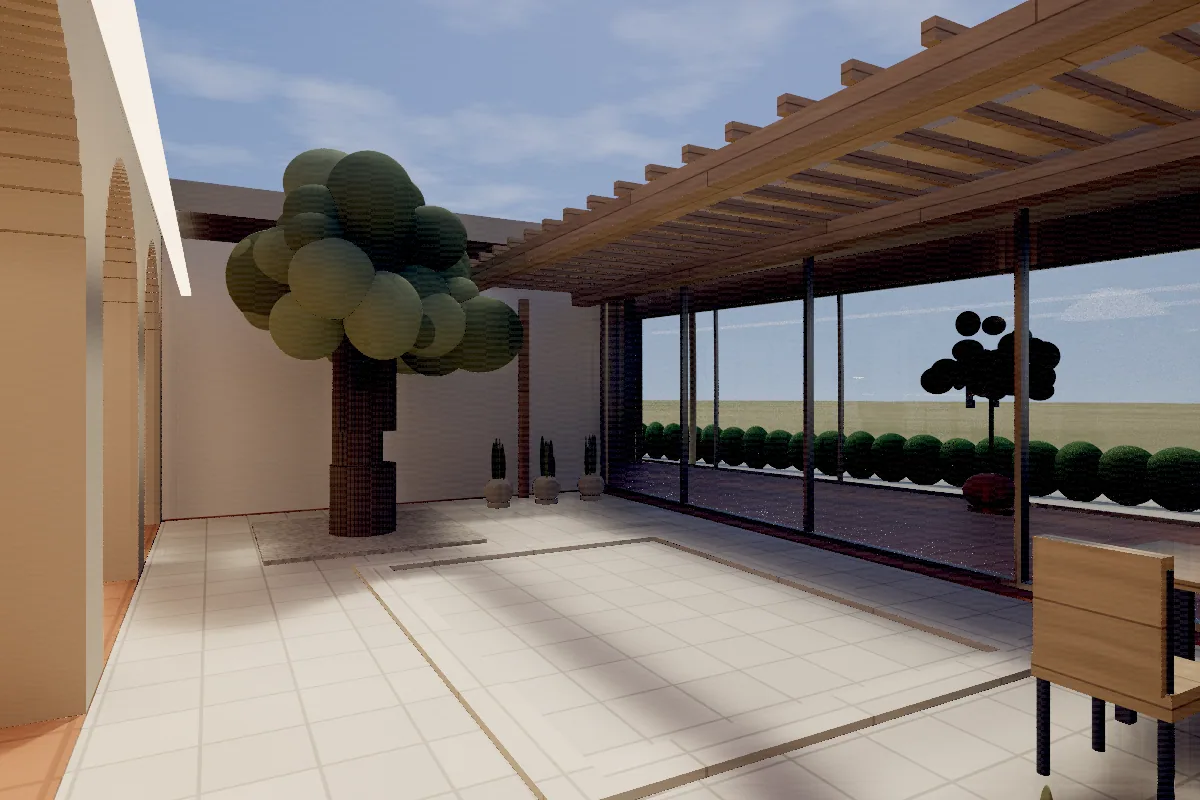
When you buy an existing house you are buying something you have stood in. Off plan, you are buying a document. The plan tells you the shape; the specification tells you everything else, and it is usually at the back in six point type.
The substitution clause
Almost every specification permits the developer to substitute materials of equivalent quality. That is reasonable — suppliers fail — but the clause should say who judges equivalence and what happens if you disagree. If it does not, ask for it to.
What is named and what is described
A named product is a commitment. A description is not. 'Engineered oak flooring' can be four millimetres of wear layer or one. 'Stone worktop' can be quartz. Go through the document with a pen and circle every phrase that describes rather than names.
- Flooring: species, format and wear layer in millimetres
- Worktops: material, thickness and edge detail
- Glazing: u-value, acoustic rating and opening type
- Heating and cooling: system type and who maintains it
- Sanitaryware: named ranges, not 'contemporary white'
The long-stop date
Every contract has a date after which you can walk away with your deposit. Find it, and then plan your own move for six months after it rather than on it. Phased schemes slip; the ones that do not are the exception.
The plan sells the apartment. The specification is the apartment.
None of this is a reason to avoid buying off plan. It is a reason to spend an afternoon with the document before you spend a deposit.
Anselm Brodt
Director — New Developments
Reads a specification the way other people read a contract, because it is one.
Profile